A stroke does not have to mark the end of a person’s life as they once knew it. The sooner appropriate and consistent rehabilitation begins, the greater the opportunity for patients to regain independence and improve their ability to perform daily activities.
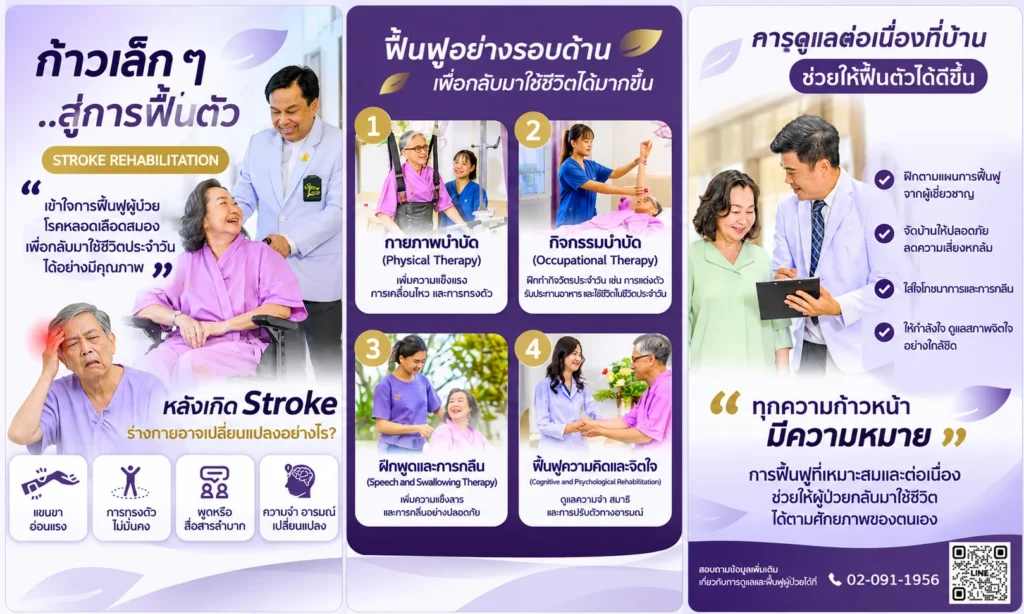
A stroke is a serious medical condition that can significantly affect both patients and their families. When the brain is deprived of blood flow or experiences bleeding, certain brain cells may become damaged. This can lead to various physical and neurological impairments, including weakness in the arms and legs, facial drooping, slurred speech, difficulty swallowing, balance problems, and changes in memory or cognitive function.
However, being diagnosed with a stroke does not necessarily mean that patients will permanently lose these abilities. The brain retains the ability to adapt, reorganize, and develop new neural connections to support recovery. This remarkable process is known as Neuroplasticity, which plays a fundamental role in stroke rehabilitation.
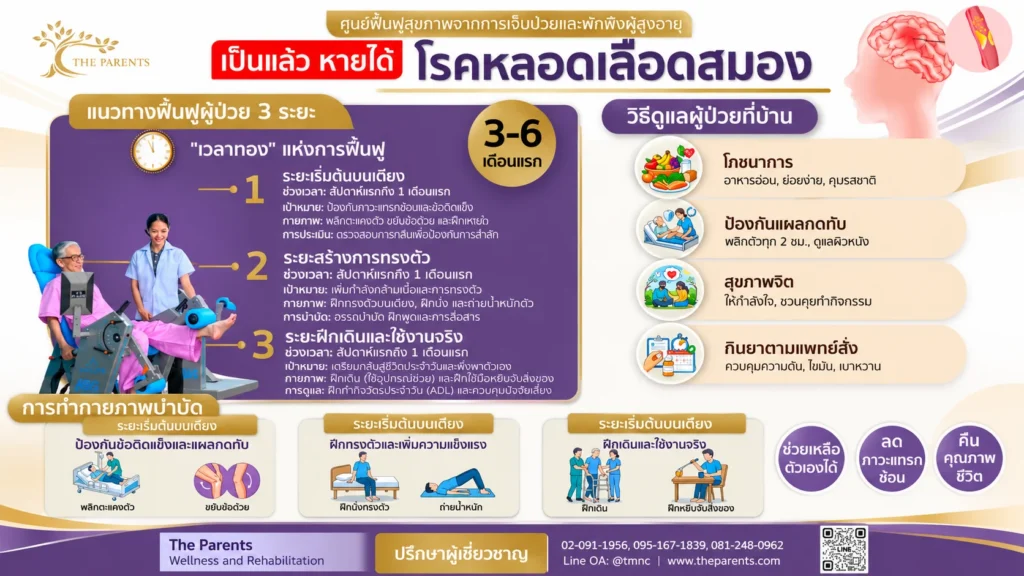
In particular, the first 3–6 months after a stroke are considered an important period for recovery. During this time, many patients have significant opportunities to improve their mobility and functional abilities, especially when they receive appropriate rehabilitation. Therefore, establishing an effective rehabilitation plan during this period is essential.
Why Are the First 3–6 Months Considered the “Golden Period” of Stroke Rehabilitation?
After a stroke damages part of the brain, the body begins its recovery process. The brain has the ability to reorganize neural connections, allowing healthy areas of the brain to compensate for damaged functions or learn new ways to perform certain activities.
This process is known as Neuroplasticity. It is an essential mechanism that enables patients to gradually regain various skills through repeated practice and rehabilitation.
During the first three months, many patients experience relatively rapid improvements in motor function, particularly when they receive appropriate rehabilitation. The following three months, from months three to six, also provide valuable opportunities for further recovery, although the rate of improvement may gradually slow down.
However, it is important to understand that 3–6 months is not a deadline for recovery. Patients can continue to improve their physical abilities, speech, swallowing, and daily living skills even after this period. The extent and speed of recovery vary depending on each individual’s condition.
Understanding the 3 Key Stages of Stroke Rehabilitation
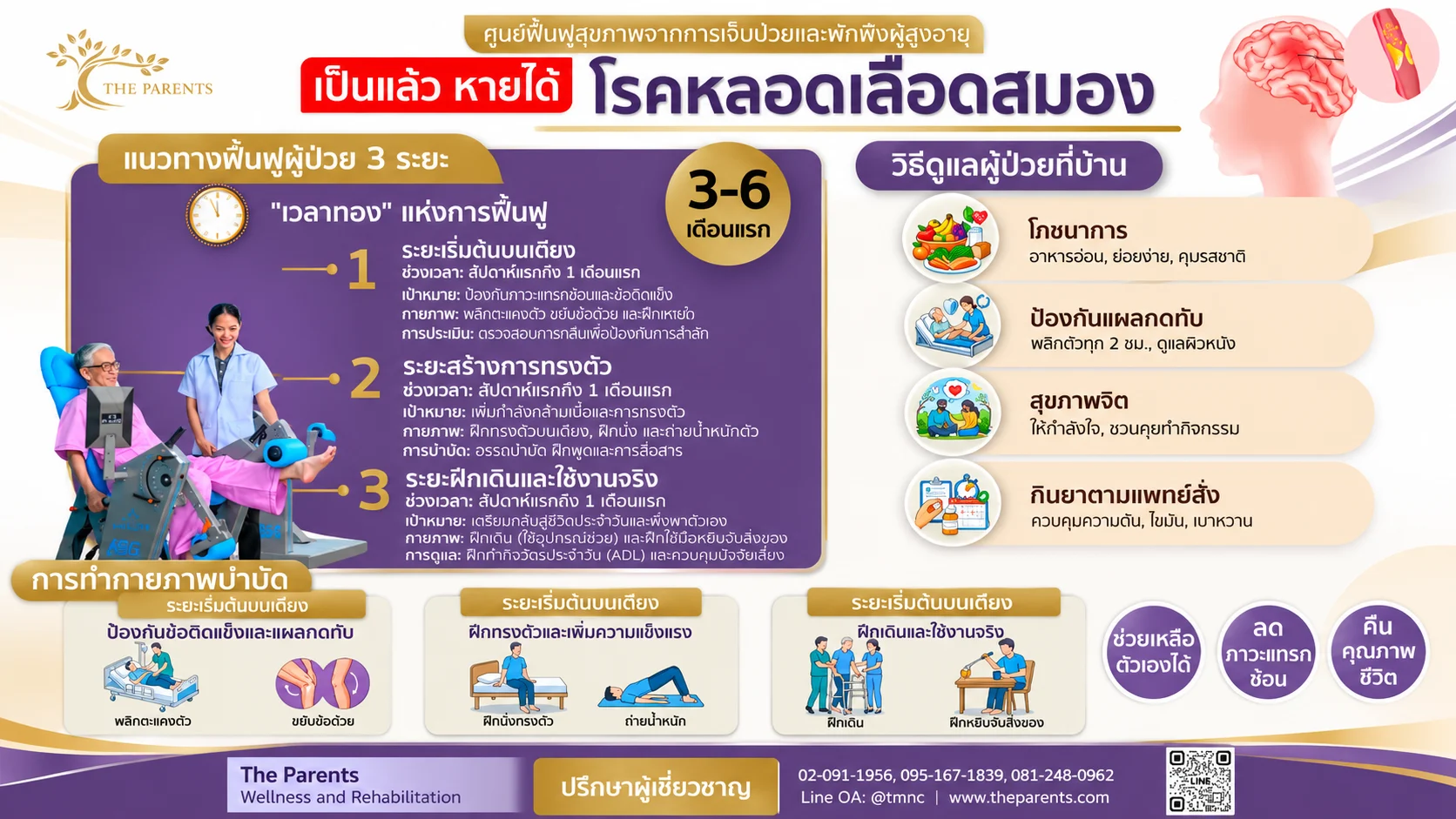
Stroke rehabilitation is not simply about helping patients walk again. It involves a systematic approach to restoring multiple physical and functional abilities. The rehabilitation process can be divided into three important stages:
1. Early Bed-Based Rehabilitation
Timeframe: The initial period after the patient’s condition has stabilized, generally within the first month, depending on individual readiness.
During this stage, safety and the prevention of complications are the primary concerns. Some patients may still be unable to sit up or move independently, making them particularly vulnerable to complications associated with prolonged bed rest.
The main goals are to maintain physical condition, reduce the risk of complications, and prepare the patient for more advanced rehabilitation.
Key rehabilitation approaches:
- Repositioning: Regularly changing the patient’s position to reduce prolonged pressure on the skin and prevent pressure injuries.
- Joint Mobilization: Performing appropriate arm and leg movements to reduce the risk of joint stiffness and muscle contractures.
- Proper Positioning: Maintaining appropriate alignment of the arms, legs, and trunk to minimize injuries and prevent shoulder complications.
- Swallowing Assessment: Evaluating swallowing ability before providing food or liquids to reduce the risk of aspiration.
What families should know:
Patients should not be rushed into standing or walking, nor should they be encouraged to perform strenuous exercises independently. All mobilization activities must be based on medical assessment and professional recommendations. Excessively intensive mobilization within the first 24 hours after stroke onset may be harmful to certain patients.
2. Strengthening and Balance Training
Timeframe: Approximately 1–3 months after stroke, with rehabilitation potentially continuing through the sixth month.
Once the patient’s medical condition has stabilized and they are ready for more intensive rehabilitation, the focus shifts toward improving muscle strength, trunk control, and balance. These abilities are essential for preparing patients to regain independent movement.
The goal is to help patients improve body control, reduce dependence on caregivers, and build confidence in their movements.
Key rehabilitation approaches:
- Sitting Balance Training: Practicing trunk control to maintain a stable sitting position.
- Sit-to-Stand Training: Practicing transitions from lying to sitting and from sitting to standing safely.
- Weight-Shifting Exercises: Training patients to distribute their body weight and control movement on both sides of the body.
- Muscle Strengthening: Using appropriate therapeutic activities and rehabilitation equipment based on the patient’s physical abilities.
What families should know:
Patients should be encouraged to participate in activities independently whenever it is safe to do so, under appropriate supervision. Avoid doing everything for them, as repeated and appropriate practice plays an important role in the brain’s learning and recovery processes.
3. Gait Training and Functional Rehabilitation
Timeframe: Approximately 3–6 months, with continued rehabilitation beyond this period when necessary.
This stage focuses on applying the abilities patients have developed during rehabilitation to real-life situations. The ultimate goal is to help them regain as much independence as possible in their daily activities.
Recovery is not limited to walking. It also includes performing everyday tasks independently and returning to family and community life.
Key rehabilitation approaches:
- Gait Training: Practicing walking patterns, weight-bearing, and balance, with assistive devices when appropriate.
- Fine Motor Skills Training: Practicing hand and finger coordination through activities such as holding a spoon, a drinking glass, or other household objects.
- Activities of Daily Living (ADL) Training: Practicing essential daily activities such as bathing, dressing, eating, and personal care.
- Communication Training: Patients experiencing speech or language difficulties should receive appropriate rehabilitation from a speech-language therapist.
What families should know:
The home environment should be adapted to ensure patient safety. Consider installing grab bars, keeping walkways clear, reducing slippery surfaces, and selecting appropriate walking aids. These adjustments can help patients practice daily activities with greater confidence and independence.
Beyond Physical Therapy: What Other Care Do Stroke Patients Need?
Successful stroke rehabilitation involves more than physical exercise. A comprehensive approach should address the patient’s physical health, mental well-being, and overall quality of life.
1. Appropriate Nutrition
Patients should receive a balanced diet that meets their individual nutritional needs. Adequate protein, vegetables, fruits, and other nutritious foods help maintain muscle mass and support the recovery process.
Patients with swallowing difficulties must undergo a swallowing assessment by qualified professionals. Food textures and liquid consistencies may need to be modified to reduce the risk of aspiration.
2. Prevention of Pressure Injuries and Other Complications
Patients with limited mobility are at increased risk of pressure injuries, joint stiffness, muscle weakness, and blood clots.
Caregivers should regularly inspect the patient’s skin, ensure proper positioning, maintain personal hygiene, and follow the care plan recommended by the healthcare team.
3. Mental Health and Emotional Support
Sudden physical changes can cause patients to experience stress, anxiety, or post-stroke depression.
Family members should provide encouragement, listen to patients’ concerns, and recognize even small improvements. If a patient experiences persistent sadness or significant emotional changes, professional mental health support should be considered.
4. Medication Adherence and Management of Underlying Conditions
Patients should take medications exactly as prescribed by their physicians and regularly monitor risk factors such as high blood pressure, diabetes, and high cholesterol.
Patients should never stop taking medication, change dosages, or purchase medications independently without medical advice, as doing so may increase the risk of another stroke.
5 Key Factors That Contribute to Effective Stroke Rehabilitation
Although receiving rehabilitation at the appropriate time is important, recovery outcomes depend on several factors, including:
- Stroke Severity: The location and extent of brain damage can significantly influence a patient’s recovery potential.
- Appropriate Timing of Rehabilitation: Once the patient’s medical condition is stable, rehabilitation assessment and intervention should begin as early as safely possible.
- Consistency of Training: Regular, goal-oriented practice helps patients progressively improve their functional abilities.
- A Multidisciplinary Healthcare Team: Collaboration among physicians, physical therapists, occupational therapists, nurses, and speech-language therapists ensures comprehensive rehabilitation.
- Family Support: Encouragement, understanding, and appropriate caregiving help patients stay motivated throughout their recovery journey.
The Parents Wellness and Rehabilitation: Supporting Stroke Patients Every Step of the Way
At The Parents, we understand that stroke rehabilitation involves much more than physical therapy. It requires compassion, understanding, professional expertise, and continuous care.
The Parents Wellness and Rehabilitation emphasizes individualized care and rehabilitation based on each patient’s abilities, needs, and limitations. Our goal is to help patients maximize their potential and regain as much independence as possible.
Rehabilitation may include muscle strengthening, balance training, gait training, activities of daily living (ADL) training, and comprehensive health support. These approaches aim to help patients regain independence and achieve a better quality of life.
Because recovery does not end when a patient leaves the hospital. It marks the beginning of another step toward living life again.
Do not let valuable recovery time pass without taking the first step. Every small improvement can become an important milestone on the journey toward independence.
Medical Disclaimer: This article is intended for general educational purposes only and should not replace professional medical diagnosis, treatment, or advice. Rehabilitation programs and exercise intensity must be individualized according to the type of stroke, the patient’s symptoms, medical readiness, and safety considerations. If someone experiences sudden facial drooping, arm or leg weakness, or difficulty speaking, seek emergency medical assistance immediately by calling 1669 in Thailand.
The Parents Wellness and Rehabilitation
สอบถามข้อมูลและบริการฟื้นฟูผู้ป่วย
โทร. 02-091-1956, 095-167-1839, 081-248-0962
Line OA: @tmnc
เว็บไซต์: www.theparents.com