Stroke Rehabilitation: Supporting Recovery Beyond Hospital Discharge and Helping Patients Return to Everyday Life
Because recovery does not end when a patient leaves the hospital. It marks the beginning of another step toward regaining independence and returning to everyday life.
A stroke is a medical condition caused by an interruption of blood flow to the brain, either due to a narrowed or blocked blood vessel (ischemic stroke) or a ruptured blood vessel that causes bleeding in the brain (hemorrhagic stroke). This can damage brain cells and affect a person’s ability to perform everyday activities.
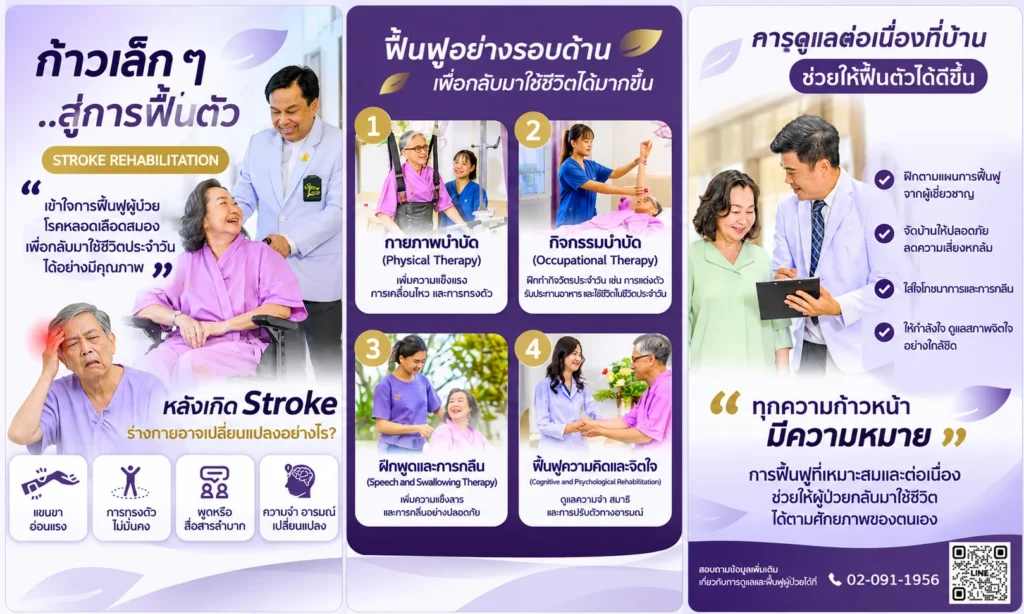
After receiving treatment during the acute phase, some patients may continue to experience limitations in mobility, balance, speech, swallowing, memory, and cognitive function. These challenges can affect their ability to carry out daily activities and interact with family members.
Therefore, Stroke Rehabilitation plays an essential role in helping patients regain functional abilities, improve independence, and achieve a better quality of life according to their individual potential.
Why Is Stroke Rehabilitation Important?
The primary goal of rehabilitation is to help patients regain the ability to perform daily activities as independently and safely as possible. These activities may include sitting up, standing, walking, eating, dressing, and communicating with others.
Rehabilitation should begin once the patient’s condition is medically stable and they are ready to participate. It should be guided by healthcare professionals who assess the patient’s symptoms, abilities, and limitations to develop an appropriate rehabilitation plan.
It is important to recognize that every patient experiences different symptoms and responds differently to rehabilitation. Setting realistic goals and continuously monitoring progress are therefore essential to the recovery process.
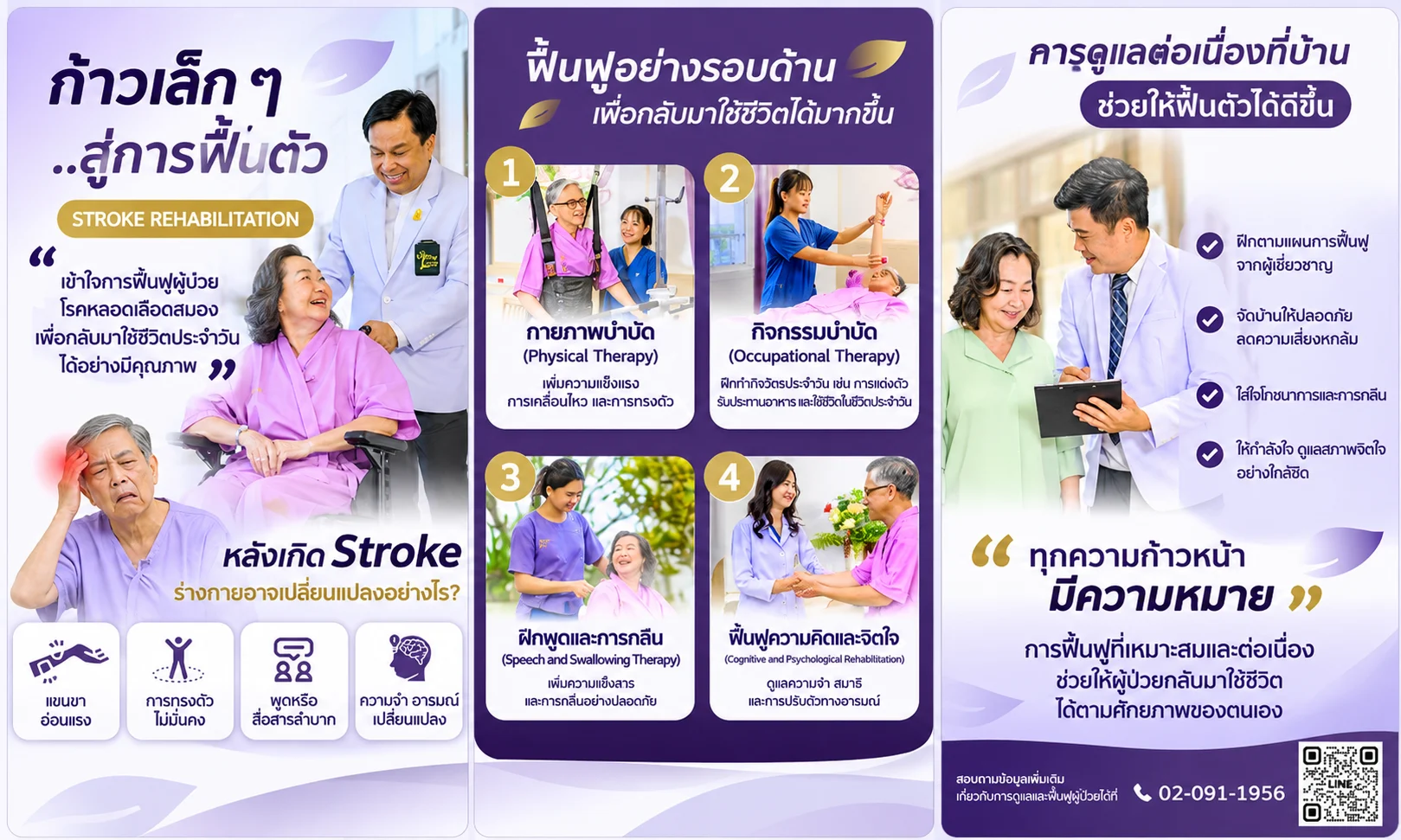
4 Key Approaches to Stroke Rehabilitation
1. Physical Therapy
Physical therapy focuses on restoring physical mobility and movement abilities. This may include exercises to improve muscle control, arm and leg movement, balance, sitting and standing, and walking.
The goal is to improve muscle strength and help patients move more safely and effectively. All exercises should be tailored to each patient’s physical condition and individual capabilities.
2. Occupational Therapy
Occupational therapy helps patients regain the ability to perform activities of daily living as independently as possible.
These activities include eating, dressing, bathing, and handling everyday objects. Therapy may also involve exercises to improve hand and arm function, perception, memory, and problem-solving skills.
The aim is to help patients become more self-reliant and return to their daily routines as appropriately as possible.
3. Speech and Swallowing Therapy
Some stroke patients may experience communication difficulties, such as slurred speech, difficulty finding the right words, or problems understanding language. Others may develop swallowing difficulties (dysphagia), which can increase the risk of choking, aspiration, and other complications.
Speech and swallowing therapy provided by qualified professionals is therefore essential to improving communication abilities and helping patients eat and drink safely according to their individualized care plans.
4. Cognitive and Psychological Rehabilitation
In addition to physical impairments, stroke patients may experience difficulties with memory, concentration, analytical thinking, and emotional well-being. These may include anxiety, emotional changes, or depression.
Assessing and addressing cognitive and psychological health is another important part of rehabilitation. It helps patients adapt to changes in their lives, manage emotional challenges, and participate in family and social activities according to their abilities.
Continuous Stroke Care at Home
When patients return home to continue their recovery, ongoing support from family members and caregivers plays an important role in the rehabilitation process.
Here are some essential ways to support stroke patients at home:
- Follow the rehabilitation plan: Encourage patients to practice activities and exercises regularly according to the recommendations of doctors and therapists. Avoid forcing or pushing them beyond their physical capabilities.
- Create a safe living environment: Make appropriate home modifications, such as removing obstacles, keeping walkways clear, installing grab bars where necessary, and reducing the risk of falls.
- Pay attention to nutrition and eating habits: Ensure patients receive adequate food and fluids according to healthcare professionals’ recommendations. Those with swallowing difficulties must strictly follow guidance on food textures and liquid consistency.
- Monitor health and symptoms: Ensure patients take prescribed medications, attend scheduled medical appointments, and are monitored for any unusual or worsening symptoms.
- Provide emotional support and encouragement: Give patients opportunities to participate in activities according to their abilities, acknowledge their progress, and allow them sufficient time to adjust to changes in their lives.
In addition, caregivers should learn proper techniques for assisting and transferring patients to reduce the risk of injury to both patients and caregivers.
Every Step Forward Matters: Rehabilitation Requires Consistency
Stroke rehabilitation is not a process that produces the same results or takes the same amount of time for everyone. Some patients may make rapid progress, while others require more time and consistent practice to achieve their rehabilitation goals.
The key to successful rehabilitation lies in appropriate assessments, personalized rehabilitation plans that match each patient’s abilities, and continuous support from healthcare professionals, family members, and caregivers.
Every improvement matters. Whether it is being able to move an arm more effectively, maintain better balance, or independently perform even a small daily activity, each achievement represents another meaningful step toward recovery.
Start rehabilitation with the right approach and provide continuous care to help patients regain independence and enjoy a better quality of life according to their individual potential.
Disclaimer: This article is intended for general educational purposes only and should not replace medical examinations, diagnosis, or professional advice from doctors and healthcare professionals. Rehabilitation exercises and programs should always be tailored to each patient’s individual condition and carried out under an appropriate care plan.
สนใจบริการดูแลและฟื้นฟูผู้สูงอายุหรือผู้ป่วย ติดต่อ The Parents
Tel. 02-091-1956, 095-167-1839, 081-248-0962
Line OA: @tmnc | https://lin.ee/ifpiZEf
Website: https://theparents.com
การเดินทางสะดวกเชื่อมต่อถนนได้หลายเส้นทาง ถนนราษฎร์พัฒนา มาทางเส้นรามคำแหง หรือ
ตาม GPS GOOGLE MAP : https://maps.app.goo.gl/amz3XooojtQPy9Pn7