How to Choose a Rehabilitation and Elderly Care Center: 6 Key Factors to Consider Before Making a Decision
When a family member begins to require more care—whether they are an older adult, recovering from surgery, undergoing physical therapy, or in need of ongoing rehabilitation—choosing the right rehabilitation and elderly care center is an important decision that requires careful consideration.
Many families begin by comparing prices, room types, or distance from home. However, other important factors should also be considered, including the care approach, safety, rehabilitation plan, and overall quality of life of the person receiving care.
Before making a decision, consider these 6 important factors:
1. Does the center have a comprehensive care team?
Every older adult and patient has different care needs. Some may primarily require mobility rehabilitation, while others may need assistance with daily activities. Some may also have underlying medical conditions that require close monitoring.
Families should ask whether the center has relevant professionals, such as doctors, nurses, physical therapists, occupational therapists, and caregivers, and how these professionals work together as a team.
What matters is not simply who is on the team, but how each professional contributes to the actual care of the person receiving services.

2. Is there an individualized assessment and rehabilitation plan?
A one-size-fits-all approach should not be used for every older adult or patient. Strength, underlying medical conditions, ability to perform daily activities independently, and rehabilitation goals can vary significantly from person to person.
A suitable center should conduct an initial assessment and develop an individualized care and rehabilitation plan. This may include walking training, balance exercises, muscle strengthening, activities of daily living training, or activities designed to support physical and cognitive function.
As a person’s condition or abilities change, their care plan should also be adjusted according to their progress.

3. Is the facility clean, safe, and suitable for older adults?
Before choosing a center, families are strongly encouraged to visit the facility in person, as many important details cannot be fully assessed through photographs alone.
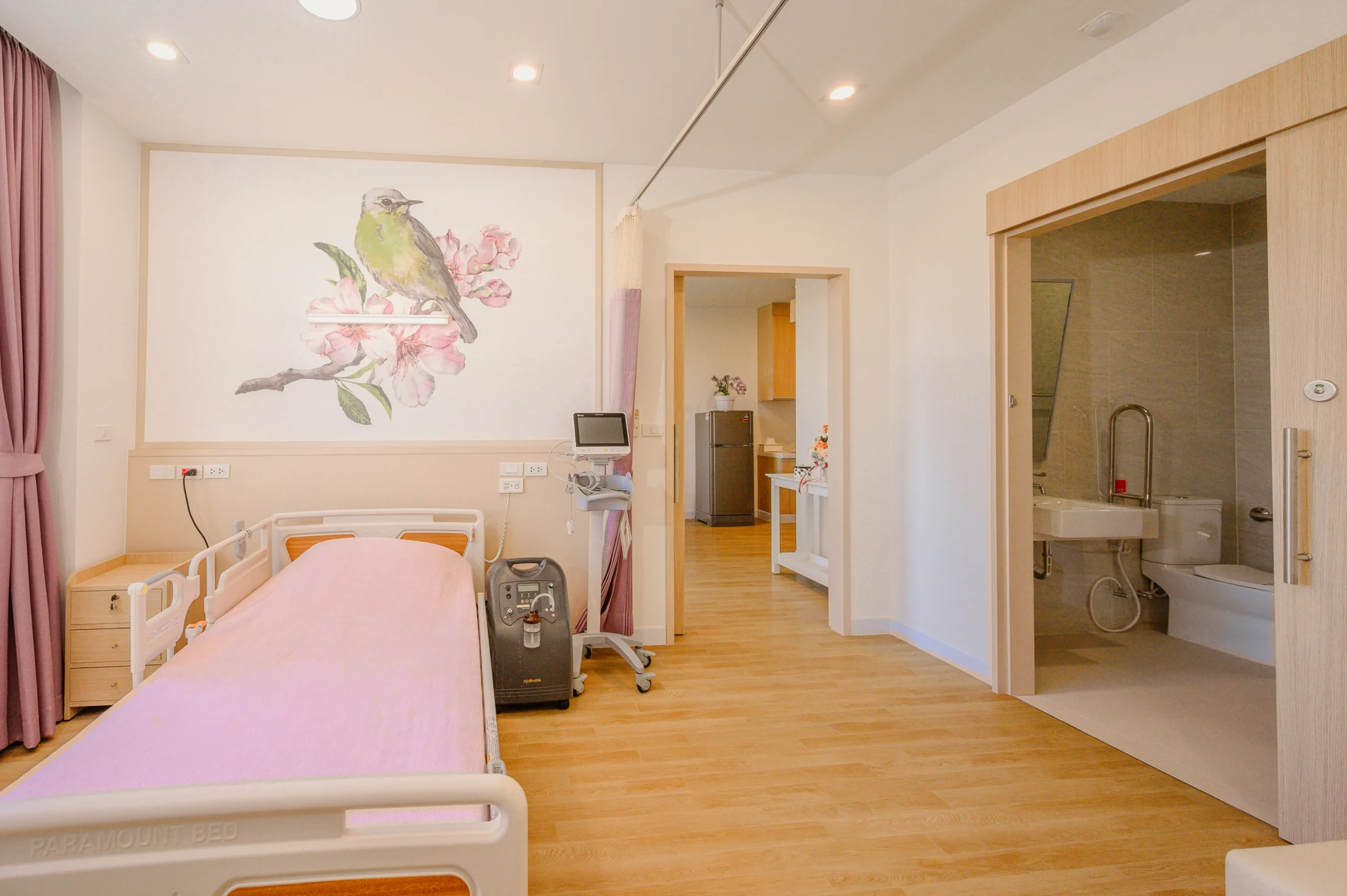
Pay attention to the walkways, bedrooms, bathrooms, activity areas, and rehabilitation facilities. Consider whether the environment is suitable for people with mobility limitations.
Particular attention should be given to uneven surfaces, slip-and-fall hazards, handrails, cleanliness, lighting, and safety systems, as an appropriate environment plays an important role in supporting the daily lives of older adults and patients.
4. Does the center focus on quality of life, not just care?
Rehabilitation is not limited to physical therapy alone.
Some older adults may stay at a care center for an extended period. Having appropriate activities can make each day more meaningful. These may include movement activities, cognitive exercises, therapeutic activities, hobbies, or social activities.
Consider choosing a facility that takes a holistic approach by supporting physical, mental, emotional, and social well-being.

5. Does the center monitor progress and communicate with the family?
One important question to ask before making a decision is:
“How will our family know how our loved one is progressing after entering the center?”
The center should have a clear process for assessment and progress monitoring, as well as ongoing communication with the family. Families should be able to understand what the person can do better, what needs to be monitored, and how the care or rehabilitation plan is being adjusted.
After all, the family remains an important part of the care and rehabilitation process.

6. Is the information clear, transparent, and verifiable?
Before making a decision, ask for complete information about the services provided, costs, what is and is not included in the package, available staff, and other terms and conditions.
If possible, schedule an in-person visit, speak with the care team, and observe the actual care environment.
Do not make a decision based on price alone. Centers with different prices may also differ in the scope of services, staffing levels, activities, and rehabilitation programs they provide.